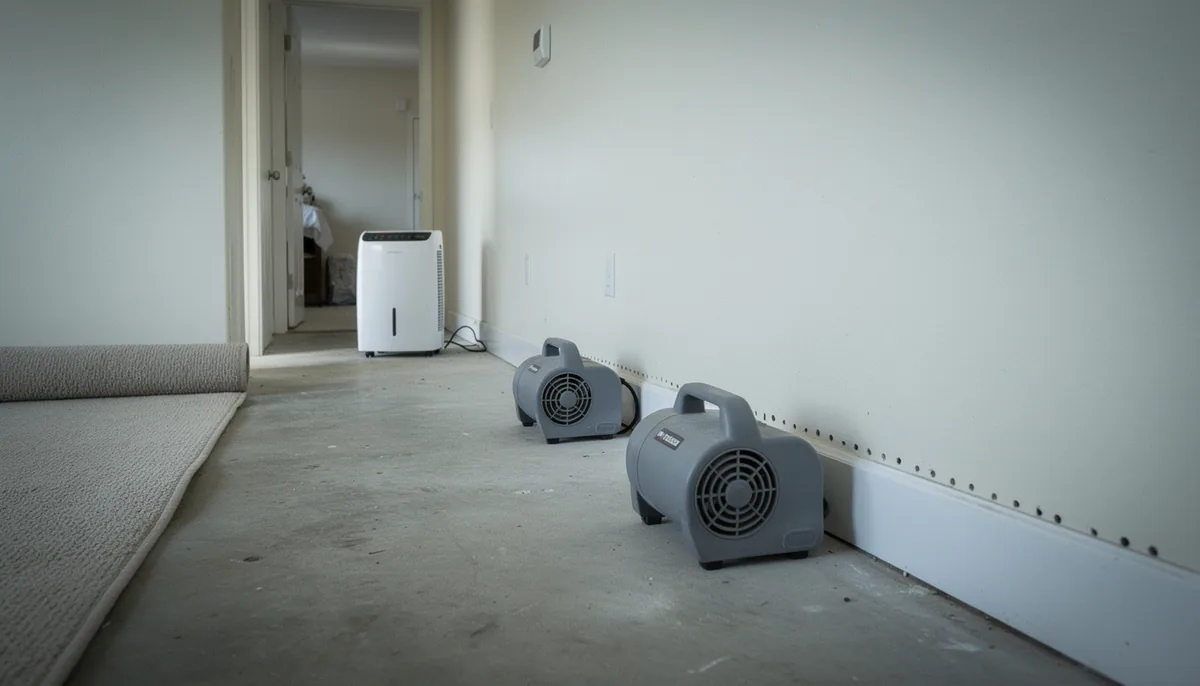
How long does water damage restoration take? It depends on which part of the job you mean. Restoration runs in phases: inspection, extraction, drying and cleaning, then the repair and rebuild that puts the room back. Each phase has its own length, and the one people ask about, drying, is the only one with a number the San Diego market tends to agree on. This guide goes through the phases in order, gives the typical drying window as a market observation, and covers what stretches a job in a Chula Vista house, from slab floors to coastal air to a kitchen cabinet that turns out to be discontinued.
The Phases, in the Order They Happen
Every water loss runs through the same sequence. First comes the inspection, where the source is confirmed stopped, the water category is noted and a moisture meter maps how far the water traveled into walls, baseboard and subfloor. Extraction follows: pumps and weighted wands pull standing water out of carpet, pad and hard floors. Then comes water extraction and structural drying, with air movers and dehumidifiers running on the wet footprint and readings taken each day. Materials that touched grey or black water are removed and surfaces are cleaned in this phase too. The last phase is the rebuild of drywall, insulation, baseboard, paint, flooring and cabinets.
The first three phases are mitigation, the emergency half that stops the damage from getting worse. The rebuild is the restoration half. Each one waits on the last. They are often priced and scheduled as two separate scopes, which is part of why one homeowner hears a few days and another hears something much longer for what sounds like the same leak.
Inspection and Extraction
These are the shortest phases, and how long they take depends mostly on the size of the wet area and what the water soaked into. Tile on a slab goes quickly. Wet carpet over pad takes longer, and a slab leak that spread under the hallway and two bedrooms takes longer still, because water travels under flooring well past the visible edge. The crew meters the whole floor before deciding where the wet area stops.
It is worth asking for the drying plan in writing before any equipment is plugged in. A good plan says which rooms are affected, what comes out, what will be dried in place, and the expected drying window.
Drying: The Phase With a Number
Most residential losses in the San Diego market take about 3 to 5 days of drying once the water is out and the equipment is set. Treat that figure as a market observation. Some jobs run longer, and the reasons are predictable: water that sat for days before anyone found it, water that reached the subfloor, cabinets or insulation, and dense materials like hardwood, plaster and concrete, which give up moisture more slowly than drywall.
Local conditions play a part. Coastal humidity in Imperial Beach and the western South Bay can slow evaporation a little, and a slab leak in an older tract west of the 805 means drying concrete as well as the floor covering on top of it.
Readings set the finish line. The IICRC S500 standard for water damage restoration is the industry's reference for how drying is checked, and under it equipment comes off as each material returns to its dry standard. Two habits help. Leave the equipment running at night, since switching it off adds days. Keep the windows and doors in the drying area closed unless the crew asks otherwise, so the dehumidifier is not fighting outside air.
Sewage and Floodwater Add Steps
Category 3 water, meaning sewage and outdoor floodwater, adds work before drying can start. The affected rooms are closed off with plastic sheeting, porous materials the water touched come out, and the slab, studs and hard surfaces are cleaned and treated. Only then do the air movers go in. The drying itself may run about as long as a clean-water loss, since a lot of the wet material is already gone, but the calendar grows by the time the removal and cleaning take.
Mold is the other reason the early phases move fast. The EPA's mold cleanup guidance stresses drying water-damaged areas quickly, so the sooner extraction starts, the shorter the list of what has to come out later.
Rebuild: Where Most of the Calendar Goes
The rebuild starts once the final readings confirm the structure is dry, and its length depends on how much came out. A hallway that lost the lower band of drywall and its baseboard is a short job. A kitchen that lost a run of lower cabinets and a tile floor is a long one, because cabinets are ordered, tile may need matching, and other trades get scheduled around them.
Permits are the other variable, though on most water damage repair work the City asks for less than people expect. The City generally exempts repairs that replace existing parts with similar materials and leave electrical and plumbing alone, so patching drywall and relaying the same flooring often needs no permit. Changes to construction or fixtures do, and so does water heater and water line work, which the plumber pulls. The City's permit guidance explains where the line falls.
Matching is the other common delay. Discontinued laminate or tile can mean choosing between a close match and running new flooring through to a doorway. That decision, and its effect on the schedule, belongs in the written rebuild scope before work starts.
Frequently Asked Questions
Can I turn the drying equipment off at night?
It is better to leave it running. Air movers and dehumidifiers are meant to work around the clock, and switching them off overnight lets the air in the room grow damp again, which can add days to the job. If the noise is a problem near a bedroom, ask the crew about moving a unit instead.
Does the type of water change how long restoration takes?
It changes the calendar more than the drying. Sewage and floodwater mean containment, removal of porous materials and cleaning before any air movers go in, so the job starts drying later even if the drying itself runs about as long. A clean-water loss can usually go straight from extraction to drying.
Why is the drying equipment still running after three days?
Equipment comes out when moisture readings show each material has reached its dry standard, and some materials take longer than others. Concrete, hardwood and the inside of cabinets are slow to dry. Ask to see the daily log, which should show the readings falling toward the target for each wet area.
Do I need to be home while the drying equipment runs?
Not all day. The crew needs access for the setup and for a moisture check about once a day, so plan to be there for those visits or leave a way in. The equipment is built to run unattended, and it should stay on while you are out unless the crew tells you otherwise.
Ready to Get Started in Chula Vista?
Chula Vista Restoration Co. serves Chula Vista and the surrounding area. Get a free, no-obligation quote today.