What We Handle

Emergency Water Extraction and Drying in Chula Vista

Water extracted, the wet footprint mapped, drying checked every day.

We'll put you in touch with a local contractor.

Built for Chula Vista

Emergency Water Extraction in Chula Vista: What the First Night Looks Like

A washing machine hose lets go, a water heater splits, a supply line fails while everyone sleeps. By the time anyone notices, the water may have been on the floor for hours, and the first job is getting it out.

The IICRC S500 drying standard, an American National Standard in its fifth edition (2021), sets how losses are classed and how drying is checked. The EPA's mold guide says to dry wet areas within 24 to 48 hours.

A crew is dispatched from Chula Vista, and the drying plan is priced in writing before the first air mover runs.

Why Choose Us

Why Chula Vista Homeowners Choose Us for Emergency Water Extraction and Drying

Water Out First
Pumps and weighted extraction wands pull standing water from carpet, pad and hard floors before anything else happens.
Moisture Mapped, Not Guessed
A pin meter and a non-invasive meter find how far water traveled into drywall, baseboard and subfloor.
Daily Drying Readings
Equipment is checked and readings logged each day, so you can see the numbers fall toward dry standard.
Records For The Claim
Photos, a moisture map and the drying log are kept in the format an insurance adjuster asks for.
Materials & Specs

What We Use for Emergency Water Extraction and Drying

Industry-standard materials and specifications you can rely on.

Water Category Handled
Category 1 clean and Category 2 grey water under the IICRC convention; Category 3 handled as sewage cleanup
Drying Equipment
Air movers and low-grain refrigerant dehumidifiers, sized to room volume and material wetness (industry typical)
Moisture Monitoring
Pin and non-invasive meter readings taken and logged daily until materials reach dry standard
Documentation Provided
Photo log, moisture map and daily drying records in the format adjusters ask for
Typical Drying Window
About 3 to 5 days for most residential losses; longer when subfloor, cabinets or insulation are wet (industry typical)
What Happens Next

Water Damage Restoration in 4 Phases

Every loss, whatever caused it, runs through the same sequence, and the price of each phase is written down before it starts.

Source Found and Water Stopped

The crew lead confirms the main valve is off, finds where the water came from and photographs the scene as found. If the source is still active, the shutoff or a temporary cap comes before any extraction. Water category is noted at this point because it changes everything that follows.

Standing Water Extracted

A pump handles anything deep enough to pump, then a weighted extraction wand works the carpet and pad in overlapping passes. Hard floors are squeegeed and vacuumed. Wet contents are lifted onto blocks or moved to a dry room so the floor underneath can be reached.

Moisture Mapped and Logged

A pin meter and a non-invasive meter are run across walls, baseboards and floors to mark where wet turns to dry, and the boundary is drawn on the wall and photographed. Each reading is written into the moisture log with its location. This map decides where equipment goes and becomes the baseline the adjuster sees.

Drying Set and Checked Daily

Air movers are angled along the wet walls and a dehumidifier is sized to the room, following the IICRC S500 convention. Baseboards or small vent holes open the wall cavities where the map says they are wet. A technician returns each day to read, adjust and log, and equipment is pulled as each material reaches dry standard.
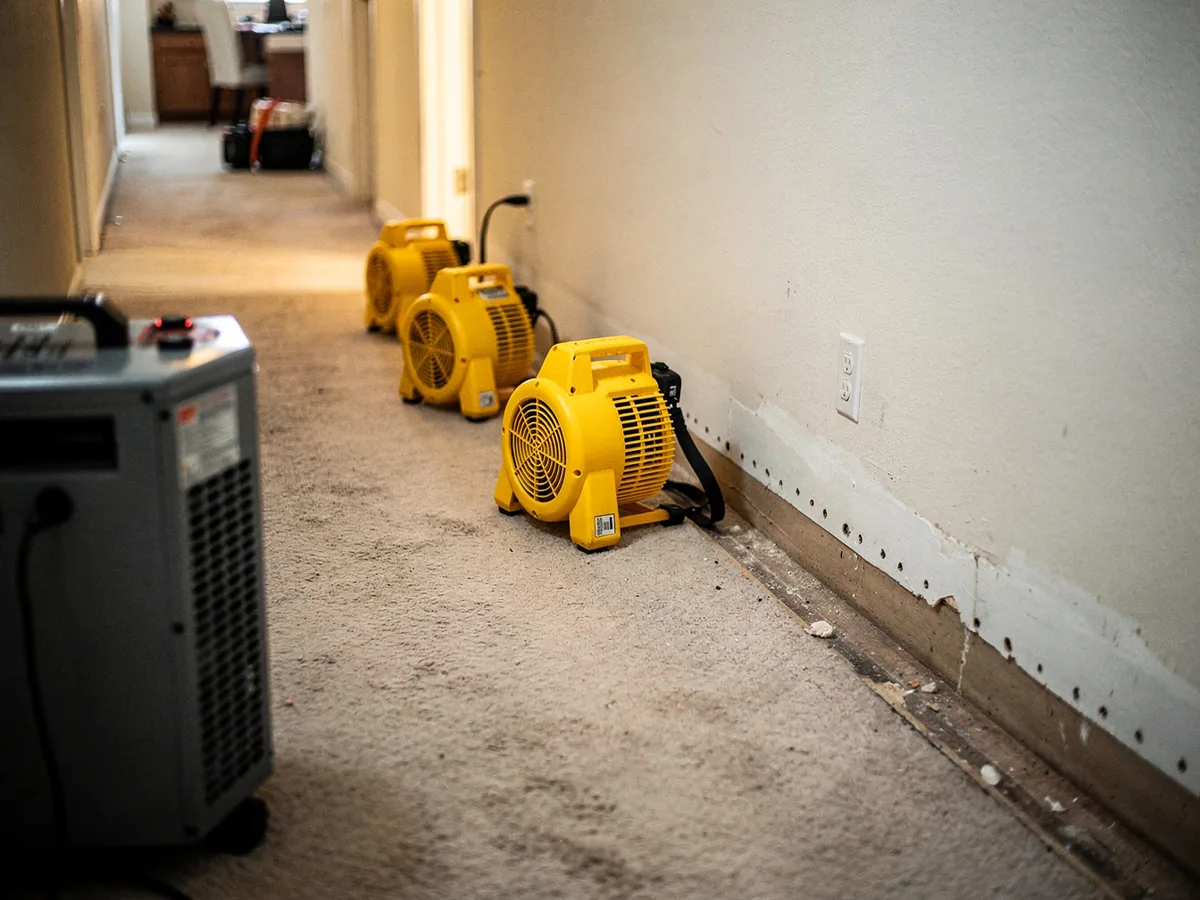
Air movers and dehumidifier set for structural drying after water extraction
Where It Works

Ideal Applications for Emergency Water Extraction and Drying

Appliance Overflows

Washing machine, dishwasher and ice maker line failures that flood a laundry room, kitchen and the rooms beside them.

Water Heater Failures

A split tank or failed fitting in a garage or hall closet that runs under walls into carpeted bedrooms.

Overflowing Fixtures

Tub, toilet and sink overflows of clean water that soak bathroom floors and wick into adjoining hallway drywall.

Supply Line Breaks

Braided or plastic supply lines behind toilets and under sinks that fail and run for hours overnight.

Ceiling Leaks From Above

Second-floor bathroom or roof leaks in two-story Eastlake and Otay Ranch homes that saturate the ceiling below.

Common Questions

Emergency Water Extraction and Drying — Frequently Asked Questions

What happens in the first hour after I call about standing water?
The person who answers walks you through shutting the main valve and keeping people and pets off the wet floor while a crew is dispatched from Chula Vista. On arrival, the crew lead looks for the source, confirms the water is stopped and checks whether the water is clean, grey or black under the industry's category convention. Then extraction starts: a truck-mounted or portable pump for standing water, a weighted wand for carpet and pad. While the water comes out, the wet footprint is marked on the walls with a moisture meter and photographed. Before any drying equipment is set, the plan and its price are written down and handed to you.
How many air movers and dehumidifiers will be in my house, and for how long?
Usually several air movers per wet room plus one dehumidifier, sized to the room's volume and how wet the materials read, following the IICRC S500 convention for equipment placement. Most residential losses in the San Diego market take about three to five days of drying, and some take longer when water sat for days or reached subfloor, cabinets or insulation. The equipment runs around the clock; turning it off at night adds days. Readings are taken daily and logged, and equipment comes out as each material reaches its dry standard rather than on a fixed date. The written drying plan tells you the expected window before the first machine is plugged in.
Do you have to remove my baseboards and cut the drywall to dry a wall?
Often the baseboard comes off and a row of small holes is drilled low on the wall so air can move inside the cavity, but a full cut is only made when the drywall is soaked or the water was contaminated. Clean water that wicked a few inches up a wall can frequently be dried in place with air movers and a wall-cavity drying setup. Grey or black water is different: porous materials it touched are removed as a matter of industry practice. Anything removed is photographed first and listed in the scope, so the repair and rebuild phase has a record of exactly what went out and why.
Will my wood floors or cabinets dry, or do they have to come out?
It depends on how long they were wet and what they are made of. Solid hardwood that was wet for a short time can often be dried with floor-drying mats that pull moisture up through the boards; laminate and engineered boards with a swollen core usually cannot be saved. Cabinets are checked at the toe kick and the back panel with a meter, and a cabinet that reads wet on particleboard often needs the toe kick opened or the unit pulled. The IICRC S500 convention treats dense materials like hardwood, plaster and concrete as a specialty drying class, and they take longer. You get a straight answer per material, written into the scope, before drying starts.
Is water mitigation the same thing as water damage restoration?
Mitigation is the emergency half: stopping the spread, extracting the water and drying the structure so the damage does not get worse. Restoration is the whole job through repairs. This page covers the mitigation phase, and the same company carries the job into cleanup and rebuild on one written scope, for homes in National City and across the South Bay, so there is no handoff between two companies. Each phase is priced in writing before it starts.
See all FAQs →
Where We Work

Serving Chula Vista & the South Bay

Crews are dispatched from Chula Vista to homes within about 25 miles, from Imperial Beach and National City through Bonita and Otay Ranch to Spring Valley, La Mesa and San Diego.

Get an Emergency Water Extraction and Drying Quote

Tell us about your project and you’ll hear back within one business day.

We’ve got your request!

You’ll hear back within one business day. Need to talk sooner? Call +1 (619) 555-0100.

Standing in Water Right Now?

Shut the main valve, keep everyone off the wet floor and call. The line is answered around the clock, a crew is dispatched from Chula Vista, and the plan and its price are written down before any equipment is set.

Request Help Now
Call Now — +1 (619) 555-0100