What We Handle

Flood and Storm Damage Cleanup in Chula Vista

Floodwater is treated as contaminated. Here is what comes out and what dries.

We'll put you in touch with a local contractor.

Built for Chula Vista

Storm and Flood Damage Cleanup in Chula Vista and the South Bay

The South Bay rarely floods, and when it does the water comes all at once. The storm of January 21 to 23, 2024 brought a federal major disaster declaration for San Diego County, with FEMA counting 858 homes affected and 595 with major damage.

Chula Vista joined the National Flood Insurance Program in 1977 and has used FEMA flood maps from 1983. The Sweetwater and Otay river corridors carry the mapped risk.

Floodwater is handled as contaminated. What it soaked comes out, what it did not is dried, and all of it is logged for your claim.

Why Choose Us

Why Chula Vista Homeowners Choose Us for Flood and Storm Damage Cleanup

Floodwater Is Category 3
Runoff that crossed streets and yards is treated as contaminated under industry convention, and porous materials it soaked come out.
Pulled Before It Molds
Carpet, pad and wet drywall that touched floodwater are removed early rather than dried in place.
Logged For The Claim
Photos and measurements are kept in a form that works for an adjuster or a disaster assistance application.
Roof Leaks Handled Too
Storm water from above is traced through ceilings, insulation and walls, not just mopped at the floor.
Materials & Specs

What We Use for Flood and Storm Damage Cleanup

Industry-standard materials and specifications you can rely on.

Water Category Handled
Category 3 for runoff and rising water, Category 1 or 2 for rain through a roof, under the IICRC convention
Materials Removed
Carpet, pad, the wet band of drywall and soaked insulation that contacted floodwater (industry practice)
Cleaning Method
Debris and silt removal, then antimicrobial treatment of studs, slab and hard surfaces before drying
Documentation Provided
High-water line photos, removed-materials list, moisture log and measurements for insurer or FEMA
Typical Drying Window
About 3 to 5 days once materials are out; longer when water sat for days or reached framing sills
What Happens Next

Water Damage Restoration in 4 Phases

Every loss, whatever caused it, runs through the same sequence, and the price of each phase is written down before it starts.

Safety Check and Water Out

Power to flooded rooms is confirmed off before anyone steps in. Standing water is pumped out and the floors extracted, with the water treated as contaminated. The high-water line is marked and photographed on every wall it touched.

Contaminated Materials Removed

Carpet, pad, the wet band of drywall and any soaked insulation are cut out and bagged, following industry practice for Category 3 water. Cabinets and contents are assessed one by one. Everything removed is photographed and listed for the scope and the claim.

Cleaning and Treatment

Exposed studs, slab and hard surfaces are cleaned and treated with an antimicrobial suited to contaminated water. Silt and debris are removed from the garage, patio and sill plates. Only once the surfaces are clean does drying equipment go on, so the equipment is not moving contamination around.

Drying and Records

Air movers and dehumidifiers run on the opened walls and floor, with daily readings logged until the framing and slab reach dry standard. The file is assembled: before and after photos, the moisture log, the list of removed materials and measurements. It is handed to you in the form an adjuster or FEMA application asks for.
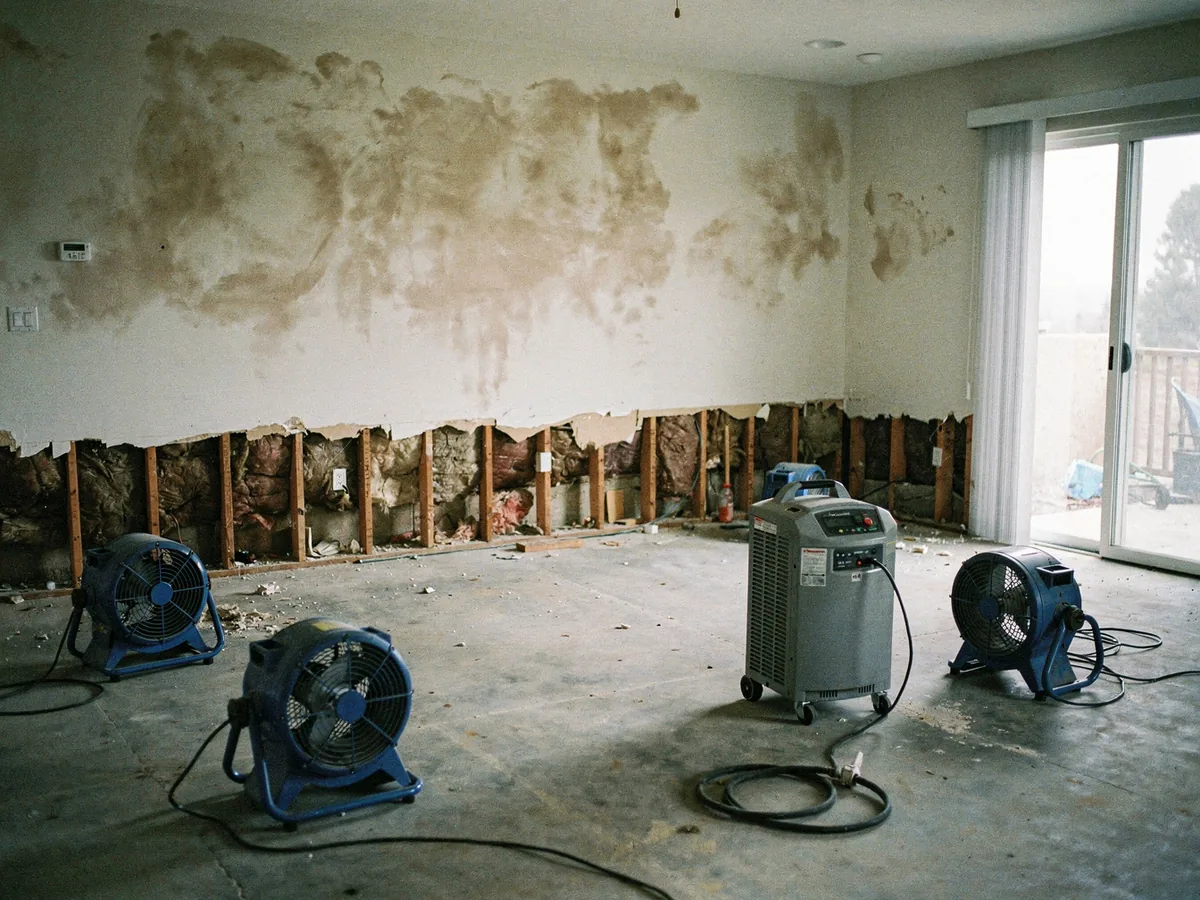
Drying equipment on open framing after flood damage cleanup in a family room
Where It Works

Ideal Applications for Flood and Storm Damage Cleanup

Garage and Street Runoff

Storm water that comes under the garage door or across a low driveway and spreads into adjoining rooms.

Roof and Flashing Leaks

Rain through failed flashing, tile or a clogged valley that saturates attic insulation and the ceiling below.

Slider and Window Intrusion

Wind-driven rain past patio sliders and window tracks that soaks carpet and the bottom of the wall.

River Corridor Flooding

Rising water in homes near the Sweetwater and Otay river channels and low-lying Imperial Beach streets.

Hillside Drainage Failures

Blocked yard drains and soaked slopes in Bonita and eastern Chula Vista that push water against the house.

Common Questions

Flood and Storm Damage Cleanup — Frequently Asked Questions

Is storm runoff in my house treated the same as a clean-water leak?
No. Water that came across a street, yard or storm drain is Category 3 under the IICRC S500 convention, the same class as sewage, because it carries soil, chemicals and whatever was on the ground. That changes the cleanup: porous materials it soaked, meaning carpet, pad, the lower portion of drywall and insulation, are removed as a matter of industry practice rather than dried in place. Hard surfaces are cleaned and treated before drying equipment goes on. Roof leaks that bring rainwater straight down through a ceiling are usually a cleaner category and more of it can be saved. The crew lead tells you which you have at the inspection, and the scope reflects it.
Does homeowners insurance cover storm flooding in Chula Vista?
Usually a standard homeowners policy treats rising water from outside differently from a sudden pipe failure inside, and flood coverage is often a separate policy, so the answer depends on which policy you hold and what the adjuster finds. Coverage is the policy's and the adjuster's call, not ours. What this company does is photograph, measure and log the loss from the first visit in the format an adjuster asks for, which is the same record a disaster assistance application needs. After the January 2024 storms, FEMA's major disaster declaration for San Diego County made Individual Assistance available to households, and the documentation matters for that too. Call your insurer early and keep every receipt.
How much does flood cleanup cost in the San Diego market?
Local cost guides put a moderate loss with drying and some demolition at roughly $3,000 to $7,500, and a major or multi-room loss at roughly $7,500 to $20,000 and up. Floodwater pushes a job toward the high end because contaminated water means more material comes out. Per square foot, the San Diego market tends to run about $3 to $7.50 depending on water category and materials. A garage with a few inches of runoff over bare concrete sits at the low end; the same water through carpeted bedrooms does not. The inspection comes first, and the price of each phase is written down before that phase starts.
What can I do before the crew arrives after a storm floods my house?
Stay out of standing water if there is any chance it has reached outlets or a water heater, and switch off the breaker to the flooded rooms if you can do it from a dry spot. Photograph everything before you move it. Open the garage or exterior doors if the rain has stopped so water can drain out instead of sitting. Do not run fans over floodwater; it spreads what is in the water into the air. Move dry contents up and away from the wet area. Then call, and the crew is dispatched from Chula Vista. Low-lying streets in Imperial Beach and along the Sweetwater River see the worst of it.
Does Chula Vista have flood zones, and does that change the cleanup?
Yes. Chula Vista joined the National Flood Insurance Program in 1977 and has used FEMA Flood Insurance Rate Maps to set floodplain boundaries from 1983, with the Sweetwater River and Otay River corridors the main mapped hazard areas. Being in a mapped zone changes insurance, not the cleanup itself: the sequence is still extraction, removal of contaminated porous materials, cleaning, drying and documentation. It does change what else may have come in with the water. River and bay-side flooding can carry silt and, where sewer mains surcharge, sewage, and that is handled as sewage cleanup. Ask the crew lead to show you the wet line on the wall before anything is removed.
See all FAQs →
Where We Work

Serving Chula Vista & the South Bay

Crews are dispatched from Chula Vista to homes within about 25 miles, from Imperial Beach and National City through Bonita and Otay Ranch to Spring Valley, La Mesa and San Diego.

Get a Flood and Storm Damage Cleanup Quote

Tell us about your project and you’ll hear back within one business day.

We’ve got your request!

You’ll hear back within one business day. Need to talk sooner? Call +1 (619) 555-0100.

Standing in Water Right Now?

Shut the main valve, keep everyone off the wet floor and call. The line is answered around the clock, a crew is dispatched from Chula Vista, and the plan and its price are written down before any equipment is set.

Request Help Now
Call Now — +1 (619) 555-0100