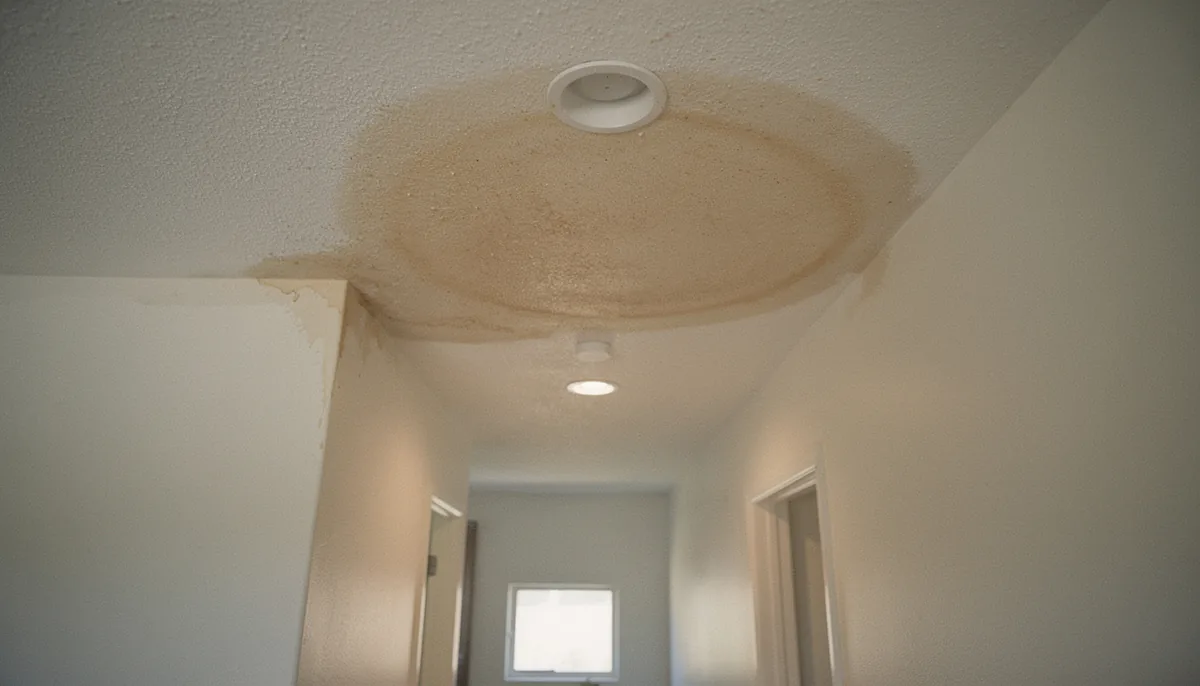
The signs of water damage in walls and ceilings tend to show up small. A tan ring appears on the hallway ceiling. A strip of baseboard pulls away from the wall. A closet along an exterior wall starts to smell like a damp towel. None of these prove there is water in the wall, and none of them should be ignored either, because water inside a wall cavity does its damage out of sight. This guide covers what each sign looks like in a Chula Vista home, which ones point to a slab leak under the floor, and how a moisture meter turns a guess into a reading you can act on.
What Water Inside a Wall Looks Like From the Outside
Paint usually changes first. Latex paint over wet drywall bubbles, blisters or peels in a patch, usually low on the wall near the floor or around a plumbing fixture on the other side. Stains that you paint over and that come back a few weeks later are another tell, since the moisture behind them keeps pulling the stain through.
Baseboard is the next place to look. MDF baseboard swells along the bottom edge when it wicks water, and the caulk line at the top splits as the board pushes away from the wall. Press on the drywall just above it. Drywall that gives under a thumb or feels cool and soft compared with the wall a few feet over is worth a closer look.
Most South Bay walls carry an orange peel or knockdown texture, and wet drywall underneath can make that texture crack or lift in a small area. Add a musty smell in a closet, a door that has started to stick in its frame, or flooring that lifts at the seams near a wall, and the case gets stronger. Catching these early is what keeps a small water damage repair from turning into a larger one.
Ceiling Signs, and Why Two-Story Homes Need a Look Upstairs
A ceiling stain with a darker, crisp outer edge is the classic sign. The ring forms as water spreads through the drywall and leaves minerals behind at the edge as it dries. More than one ring inside another means the leak has wet and dried more than once.
In the two-story homes common in Eastlake and Otay Ranch, the ceiling below an upstairs bathroom is the place to check first: a slow drip from a toilet seal, a shower valve or a tub drain can wet that ceiling for weeks before it shows. Ceilings under an attic air handler deserve the same look, because a clogged condensate line can overflow onto the drywall.
A sagging or bulging ceiling is a different situation. That drywall is holding water and can come down. Keep people out of the room, turn off the power to any light fixture in it, and put a bucket under the low point instead of poking it.
Slab Leak Signs Under the Floor
A lot of Chula Vista homes sit on concrete slabs, and in the older tracts west of the 805, copper supply lines have spent decades under or inside that concrete. A pinhole leak there can run for weeks before anything shows. The signs are a warm or damp spot on the floor, the sound of running water when nothing is on, a water bill that jumps without an explanation, and tile that cracks or lifts.
The meter test is the simplest check. Turn off every fixture and appliance that uses water, then watch the meter. If it keeps moving, water is leaving the pipes somewhere. Depending on where you live, your meter is read by Sweetwater Authority, which covers National City, Bonita and western and central Chula Vista, or by Otay Water District on the eastern side, and either can help you read it. If the meter moves with the house shut down, close the main valve and call a leak detection plumber to pinpoint the line. The plumber fixes the pipe. The water it left behind in the slab, the flooring and the bottom of the walls is a separate job, and in the older tracts that is the usual slab leak cleanup: extraction, moisture mapping and drying.
Confirm It With a Meter Before Anything Gets Cut
Stains, smells and soft spots point to water. A moisture meter confirms it. A pin meter reads the moisture content of drywall and wood where the pins go in. A non-invasive meter scans through the surface and shows where readings change from dry to wet, which is how a restoration crew maps the edge of the wet area on a wall. Thermal cameras can show cool patches that suggest moisture, but a cool patch still needs a meter reading to back it up.
The reading also sorts old damage from active damage. A stain that reads dry is usually cosmetic, left from a leak that was fixed years ago, and it needs primer and paint. A stain that reads wet means water is still getting in. Ask for the readings in writing, with the locations marked.
Timing matters because of mold. The EPA's guide to mold, moisture and your home points out that mold can grow on the back side of drywall and other hidden surfaces, where nobody sees it. A leak that has run for weeks deserves a meter check even if the wall looks fine.
What Happens Once You Find It
Stop the source first, which may mean a plumber for a supply line or a roofer for a leak from above. Photograph the stain, the baseboard and anything else you noticed before work starts. Then the wet area gets mapped and dried. Clean water that wicked a short way up a wall can often be dried in place with the baseboard off and a few small holes drilled low in the drywall so air reaches the cavity. Drywall that is soaked, or that touched contaminated water, gets cut out at a set height and replaced once the framing reads dry.
Frequently Asked Questions
What are the early signs of water damage on a ceiling?
A tan or yellow ring with a darker outer edge is the most common early sign. Others include bubbling or peeling paint, small cracks in the texture, nail pops and a damp, musty smell in the room. In two-story homes, check the ceiling under upstairs bathrooms and below any attic air handler first.
Should I paint over a water stain on my ceiling?
Only after the leak is fixed and a moisture meter reads the drywall dry, because paint over a wet stain hides the one sign you had. Use a stain-blocking primer first. Ordinary latex paint over a dried water ring can let the old stain show through again within a few weeks.
Will a water-damaged ceiling dry out on its own?
A small stain from a leak that has been fixed can dry, and the drywall often needs only primer and paint once a meter reads it dry. A ceiling that sags, feels soft or holds water above it will not recover and has to be opened, dried and replaced. Get a reading before deciding.
Can a thermal camera find water inside a wall?
A thermal camera shows temperature, not moisture. Wet drywall often reads cooler than the wall around it, so the camera can point to where to look, but a cool patch can also be a draft or a gap in the insulation. A moisture meter reading at that spot is what confirms water.
Ready to Get Started in Chula Vista?
Chula Vista Restoration Co. serves Chula Vista and the surrounding area. Get a free, no-obligation quote today.