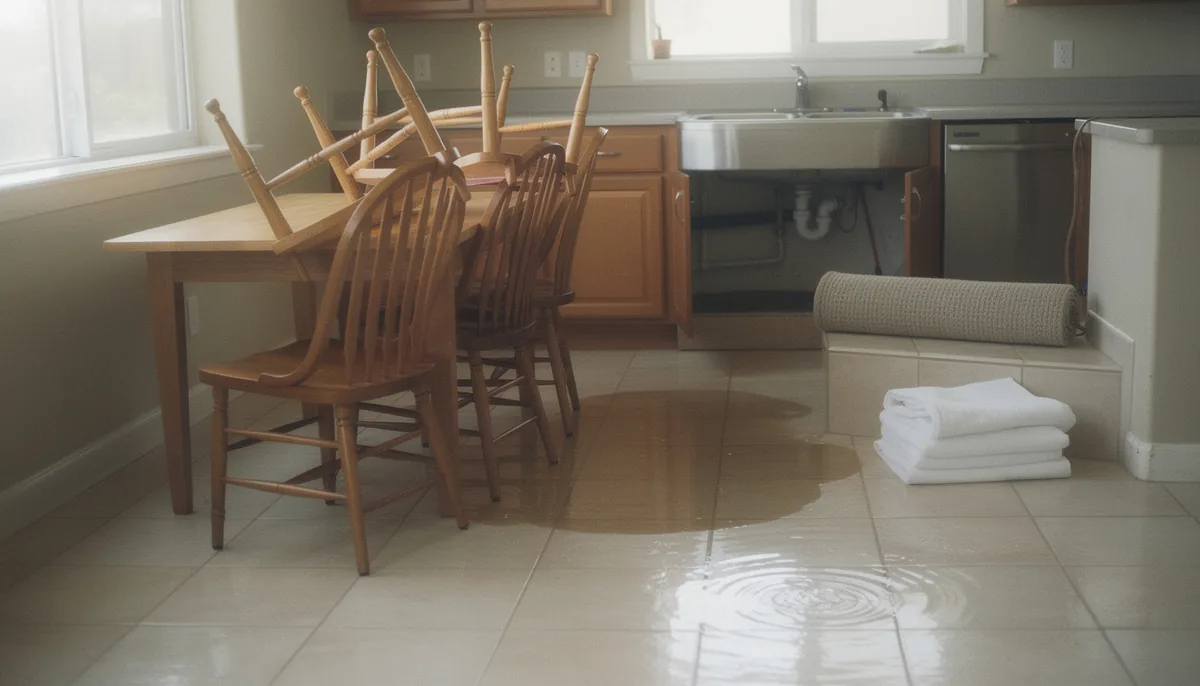
If you are working out what to do after water damage in your Chula Vista home, start with one valve. Shut the water off, then take everything else in order. A supply line under the kitchen sink, a water heater that split in the garage and a toilet that backed up into the hall bath all call for the same first moves. Stop the water. Make the room safe. Record what you see. Then get the water out and the structure drying before the drywall, baseboard and cabinets soak it up. This guide walks through those steps the way a crew lead would give them to you over the phone, along with what to tell your insurer and whether you can stay in the house while it dries.
Stop the Water and Make the Room Safe
Find the main shutoff before anything else. In a lot of South Bay houses it sits at the front of the house near a hose bib, or inside the meter box at the curb. Turn it clockwise until it stops. If the leak is coming from one fixture, the small valve behind that toilet or under that sink will do the job.
Power comes next. If water has reached outlets, extension cords, a floor lamp or the water heater, switch off the breakers for those rooms, and only do it from a dry spot. Never wade through standing water to reach a panel. Keep kids and pets out of the wet area.
Once the water stops rising, the loss stops growing. What is left is cleanup: pulling out standing water, finding how far it traveled and drying what can be dried. If the water reached carpet, drywall or cabinets, this is usually the moment people pick up the phone and call for emergency water damage restoration.
Photograph Everything Before You Move It
Before you pick anything up, take pictures. Shoot each wet room wide from the doorway, then get close on the source, the water line on the walls, swollen baseboard and anything that got soaked. Those first images are the record of how the loss looked before anyone touched it.
Then protect what you can. Carry dry furniture, electronics and boxes to a dry room. Lift curtains and bed skirts off the floor. Put a square of aluminum foil or a plastic lid under the legs of heavy furniture that cannot move, so the wood does not wick water and the finish does not stain the carpet. Pull up throw rugs. Leave the installed carpet where it is for now.
Skip the household vacuum, which is not built for water. Stay out of any room where the ceiling is bulging or dripping around a light fixture.
Work Out What Kind of Water It Is
Restoration work sorts water by category, and the category decides what can be dried and what has to come out. Category 1 is clean water from a supply line, a water heater or a fill valve. Category 2, grey water, carries some contamination, like a dishwasher or washing machine discharge. Category 3, black water, is sewage and outdoor flood water that has crossed soil and streets.
Clean water gives you a window. The EPA's guide to mold and moisture advises drying wet materials quickly, and materials left wet past about 48 hours are commonly cited as able to support mold growth. That is why the first day matters more than any later one.
Sewage is different. Do not try to clean it up yourself, and switch off the central air so it does not move contaminated air through the house. In Chula Vista, the City's sewer lateral policy makes the owner responsible for the line from the public sewer to the house, and the City handles backups that start in its own main. If the backup started in the City's main, the City sends a cleaning company. If it started in your own lateral, the sewage backup cleanup the City leaves to you is the same work: contain the rooms, remove what the water touched, then clean, treat and dry the rest. A plumber will tell you which side the blockage is on, and the photos should show it.
Call Your Insurer, Then Get Drying Started
Report the loss to your insurance company early, even if you are not sure the policy covers it. Whether it pays is the policy's and the adjuster's call. Sudden events like a burst pipe tend to be read differently from a slow leak behind a wall, and rising water from outside is often a separate flood policy. The California Department of Insurance residential insurance guide explains how homeowners policies are organized and what to ask your carrier. If you do not know when the leak started, say so instead of guessing.
Homeowners policies tend to expect you to take reasonable steps to keep the damage from spreading, so do not wait on the adjuster to start drying. Box fans and a wet vac can handle a small clean spill on tile. Once water has reached carpet pad, drywall, cabinets or the subfloor, fans dry the surface while the inside of the wall stays wet. That calls for pumps, a moisture meter and drying equipment sized to the rooms. When you call, you can keep it short. Saying that you need water extraction, that it is clean water, and that it is in the kitchen and hallway gives a dispatcher most of what they need to send the right truck. Ask for the drying plan and its price in writing before the equipment goes in, and keep every receipt.
Can You Stay in the House?
With a clean-water loss, the answer is usually yes. Drying equipment is loud and it warms the rooms, and the affected area is off limits, but the rest of the house stays usable. A sewage or flood loss changes that. The affected rooms are sealed off, and if the kitchen or the only bathroom is inside the containment, a few nights somewhere else may be easier. Ask which rooms will be out of use and for roughly how long before anything is set up.
Frequently Asked Questions
Where is the main water shutoff in a Chula Vista house?
In many South Bay homes it sits at the front of the house near a hose bib, or inside the meter box at the curb. Turn it clockwise until it stops. Find it before you ever need it, and show everyone in the house where it is.
Should I call my insurance company or a restoration company first?
Stop the water first, then make both calls close together. Report the loss to your insurer early, since policies tend to expect prompt notice, and start the drying without waiting for the adjuster, because wet materials get worse the longer they sit. Keep the photos, the written drying scope and every receipt for the claim.
Should I pull up wet carpet before the crew arrives?
Leave installed carpet where it is. Pulling it off the tack strip can tear or stretch it past saving, and the crew needs to see and meter the pad underneath before deciding what stays. Throw rugs are different: lift them, photograph them and carry them to a dry room or the garage.
What photos should I take of water damage for insurance?
Start wide from each doorway so the whole room shows, then get close on the source, the water line on the walls, swollen baseboard and damaged belongings. Take them before you move anything, keep shooting as the job goes, including anything that gets removed, and write down when you found the water.
Ready to Get Started in Chula Vista?
Chula Vista Restoration Co. serves Chula Vista and the surrounding area. Get a free, no-obligation quote today.